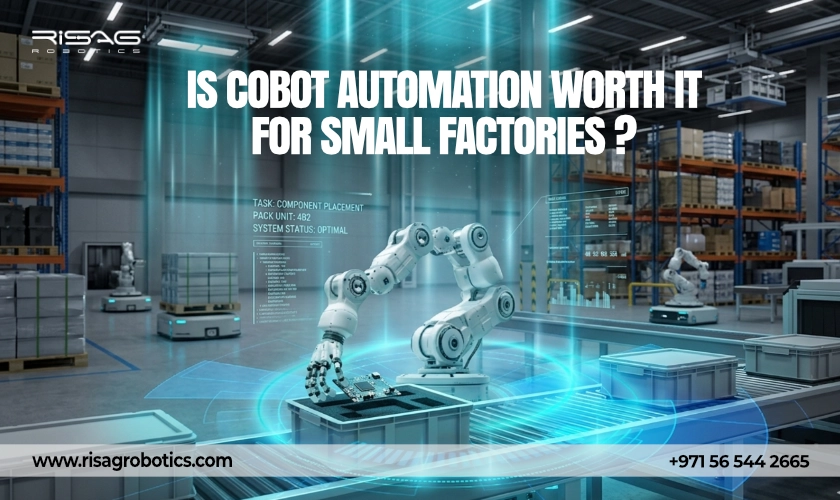
Is Cobot Automation Worth It for Small Factories?
- event_available 18-03-2026
Collaborative Robots known as Cobots which can change how small factories work and in this blog we will find out if they are a worthy investment and also we’ll look at what are cobots, How they are used?, and whether having them is good for small manufacturers.
What Is Cobot Automation?
Cobot Automation refers to the use of collaborative robots that are designed to work safely with humans to help with small tasks in manufacturing places. This robot is flexible, adaptable and can learn new tasks fast.
Cobots connect the gap between human skill and robotic precisions. This provides factories with both human and robotic workforce that improves productivity while also reducing the pressure on employees.
1. How do Cobots Work?
Cobots have sensors and safety features that allow them to work without humans. They can detect when a human is nearby and slow down or stop to prevent accidents.
- Sensors & AI: Modern cobots use cameras, force sensors, and algorithms to understand their environment.
- Easy Programming: Cobots often use interfaces; workers can train them by demonstration instead of coding
- Human Robot Collaboration: Workers and cobots share workspaces and tasks, rather than replacing humans entirely.
2. Types of Cobot Automation
There are different types of cobots based on their functionality:
- Pick and Place Cobots: good for moving parts place to place
- Assembly Cobots: helping with screwdriving, fitting, or assembling small components
- Inspection Cobots: good for identifying defects by using their vision systems
- Packaging Cobots: good for loading boxes, labelling items, or preparing products for shipping.
3. Differences Between Cobots and Traditional Robots
| Feature | Traditional Industrial Robots | Cobots |
|---|---|---|
| Safety | Need safety cages | Safe for human accessibility |
| Flexibility | Limited | Highly adaptable |
| Programming | Hard | Simple |
| Price | Expensive | Cheaper |
| Space required | Huge | Small & compact |
Cobots are easier to put in small factories where space, budget, and worker flexibility matter more.
Uses of Cobots in Small Factories
Cobots have many industrial applications. Here are some key points which shows how they add value:
1. Assembly Line Support
Cobots can take over repetitive tasks like screwing, fitting, or inserting things.
- 1. Increases consistency: Cobots don’t get tired or distracted.
- Free workers for higher level skills: Employees can focus on quality control or machine monitoring.
- Scalable: Easy to reassign cobots if production models change.
2. Pick and Place Operations
Cobots are often used to pick items from one bin and place them correctly in another spot.
- Fast and accurate: Cobots reduce misplaced products that lead to wastage of time
- Works with small parts: Great for electronics or tiny mechanical components.
- Minimal training needed: Operators can teach tasks quickly using direct guidance
3. Quality checking
Cobots with cameras and vision software can check for any damages in the product.
- Detects imperfections human eyes can miss.
- Collects data for analysis: Cobots can record defect rates for long term improvement
- Ensures compliance: Especially useful in a place where the production quality standards matter.
4. Packaging and Preparing
Once products are ready cobots can pack them into boxes or arrange them on slots.
- Reduces human strain: Heavy lifting keeps workers safe.
- Faster time: Packing issues can delay shipments but cobots can speed this up.
- Adjusts to product changes: Different box sizes or pallet configurations need only minor reprogramming.
5. Machine Handling
Cobots can load and unload CNC machines, 3D printers, or injection molding machines.
- Improves machine utilization: Machines run more continuously with less idle time.
- Safer for hazardous environments: Cobots handle tasks in areas that are unsafe for humans (heat, chemicals).
- Lower setup time: Workers can give jobs and monitor progress remotely.
6. Welding and Soldering
Some cobots are programmed to perform welding tasks, good for metal fabrication.
- Consistent weld strength: Reduces defects caused by fatigue
- Repeatable accuracy: Every joint is welded to the same standard.
- Training safety: Minimizes exposure of workers to sparks and heat.
7. Material Handling
Cobots move raw materials around the shop floor.
- Prevents workplace injuries: Lifting heavy items causes fewer work related muscle injuries.
- Increases efficiency: faster in moving items place to place
- Optimized workflow: Cobots can run continuous tours between workstations.
8. Data Collection and Monitoring
Cobots can search details and store them into analytics systems
- Real time details: Helps managers identify production problems.
- Predictive maintenance: it can detect before the machine breaks
- Increased control quality: Data can help to decrease
9. Worker Training and Assistance
Cobots can help new workers by guiding them through processes
- Job coaching: Cobots can show correct procedure of assembly
- Consistent instructions: Eliminates differences between trainers
- Shortens learning time: New hires become productive faster
10. Flexible Workflows
Cobots can be reprogrammed fastly.
- Adapts to seasonal shifts: Useful for factories producing different products
- Supports customised orders: Cobots can switch tasks without heavy reconfiguration
- Low wastage of time for changing: Keeps production flexible.
Benefits of Cobot Automation for Small Factories
Cobots have some advantages that are strategic:
1. Lower working Costs
- Cobots reduce long term costs by working on repetitive, simple tasks.
- Fewer workplace injuries means low insurance costs.
- Reduced scrap price and rework
- Energy efficient compared to traditional robots
2. Improved Productivity and Output
Cobots can work without issues
- Full time operation is possible
- Consistent production flow
- Faster order fulfillment
3. Improved Workplace Safety
Cobots are safe around workers and trained for collaborative tasks
- Built in force limits and sensors to prevent injuries
- Reduces heavy lifting or dangerous tasks for humans
- Improves safety culture.
4. Quick Installment
Cobots can be installed and programmed quickly
- Wastage of time minimized during installation
- Adaptable to small spaces
- Staff can learn cobot controls quickly
5. Scalability
Cobots help small factories grow without major upgrades in their infrastructure
- Add more cobots gradually as production increases
- Reuse cobots for new applications
- Scales with workforce needs.
Challenges to see Before putting Cobots
Before looking in, small factories should also be aware of potential limitations:
1. Initial Investment
Cobots are cheaper than traditional robots but the initial costs still matter. The return on investment must be calculated and there may also be extra hardware/software costs.
2. Training and Reskilling
Employees need training to operate and maintain cobots but it requires upskilling at first and also daily learning as tech changes.
3. Integration with Existing Systems
Cobots must be there in the current workflow, it may require software upgrades and also communication between machines can be hard.
4. Task difficulty
Cobots are great for repetitive tasks but they may struggle with unstructured work because they are designed to work best in predictable environments and this is also not a solution for every manufacturing task.
Is Cobot Automation Worth It for Small Factories?
Answer: Yes but here are some considerations.
Cobots are normally good for factories that:
- Have repetitive work that doesn’t need human creativity
- Need to improve productivity without increasing labor costs
- Want to improve safety and reduce injuries
- Have small spaces where traditional robots won’t fit
- Are ready to invest in employee training and process redesign
However, cobots may be less worth it if the factory:
- Has very unpredictable jobs
- Lacks a plan for how to integrate automation
- Can’t support even lowest upfront costs
- Doesn’t have staff willing to learn new systems
Strategic Points for Small Factories
Below are some additional factors many companies don’t consider:
1. Long Term ROI vs Short Term Cost
Cobots are a good investment for 1-3 years because of lower labor and error costs.
- Consider total lifetime savings, not just upfront price
- Fewer defects means fewer returns and rework costs
- Data analytics leads to process optimization over time
2. Keeping Technical & Skilled Workers
Cobots can be attractive to technical workers.
- Employees enjoy working with advanced technology
- Cobots help reduce burnout
- Upskilled workers would often stay longer
3. Competitive Advantage
In competitive industries, automation can help in scaling and surviving the factory
- Faster response times to demands in the market.
- Better quality means stronger reputation
- Cobots support innovation
4. Sustainability and Waste Reduction
Using cobots thoughtfully can reduce waste and energy use
- Precise handling reduces wastage materials
- Efficient scheduling means less idle time and energy use.
- Improved quality means less scrap
Conclusion
Cobot automation is useful for small factories due to the fact that it increases productivity as well as safety.The initial investment may be a bit high and there would also be integration challenges but this could be a good investment owing to the fact that it gives long term benefits like quality, efficiency and workforce development. To find the best Cobots in the Middle East, there’s no one other than RISAG Robotics.